

How To Install Threaded Fork
In this post, we have a detailed look at removing and installing a threaded headset.
We demonstrate how to use the special tools you demand to easily remove and install a threaded headset without damaging a bike's caput tube or the headset itself.
CONTENTS
What is a Threaded Headset?
How Does a Threaded Headset Work?
Can I Use a Threaded Fork with a Threadless Headset?
How to Remove a Threaded Headset
How to Install a Threaded Headset
WHAT IS A THREADED HEADSET?
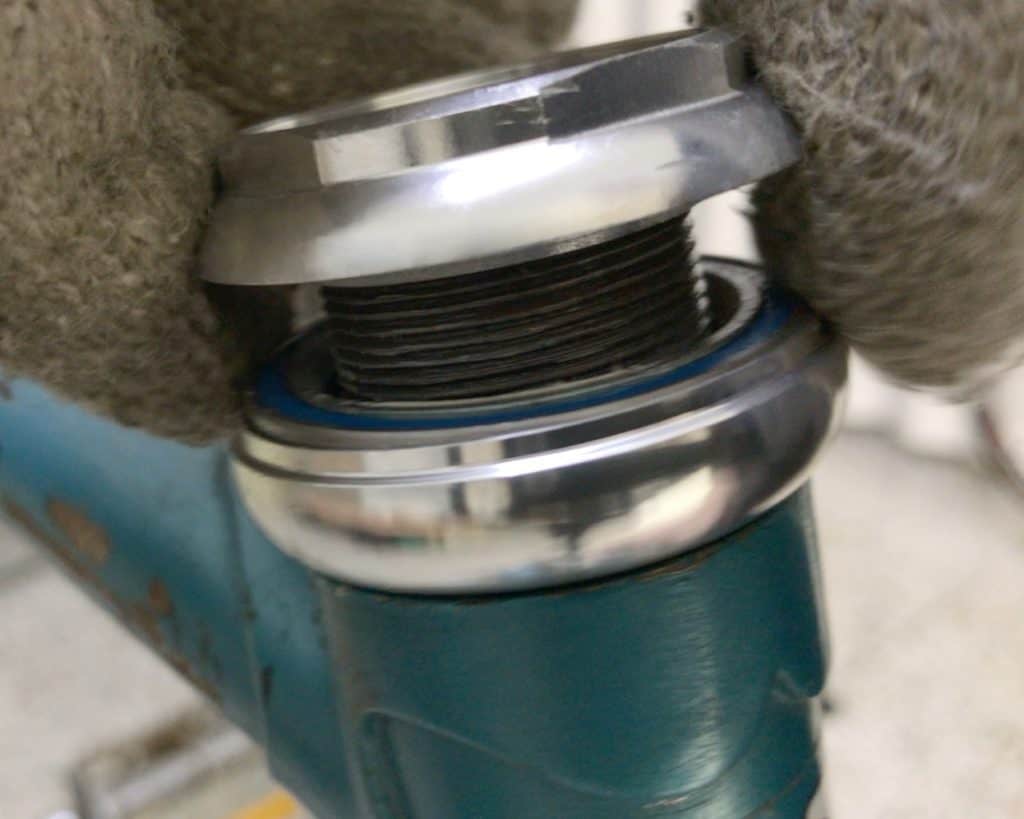
A threaded headset screws onto corresponding threads on the fork.
There are two types of headset, threadless and threaded . The fork, even so, is the key to both designs.
A threadless headset works with a fork that lacks threads on the steerer. Moreover, each steerer is the same length and is cut to a different size depending on rider preference. The steerer is normally 1 one/8 inch in diameter.
A cycle stalk is not inserted into the steerer but slides onto the steerer. Tightening the stem bolts secures the stalk to the steerer.
A rider opting for an 'aggressive' racing position cuts the fork to fit the stalk with no gap betwixt the top of the headset and the stem.
A rider wishing a more upright position opts for a longer steerer, filling the gap between stem and headset with one or more spacers.
A threaded headset works with a fork that has threads running from the elevation down towards the fork crown for several inches.
The fork steerer is 1 inch in bore. Steerer length is specific to the size of the bike into which information technology is installed.
HOW DOES A THREADED HEADSET Work?
A threaded headset works with a threaded fork fitting the frame into which it will be installed.
A threaded top race screws onto the fork threads, then tightens onto the bearings which are either caged in a retainer or run free in the race.
The central to making a threaded headset piece of work properly is past tightening the top race or preloading the bearing, noting the indicate where fork rotation becomes stiffer.
You want the whole headset unit to be compact with no play, merely still easy to rotate left and right.
A washer sits on pinnacle with a locknut to prevent the summit race loosening.
The exception to this rule is for threaded headsets that use sealed bearings which are much less sensitive to the corporeality of torque practical to the top race.
CAN I Apply A THREADED FORK WITH A THREADLESS HEADSET?
Possibly.
The problem is not the headset but the fork'due south length.
A threadless headset works in conjunction with a steerer cut to the required length. That length depends on a cyclist's preferred stack meridian.
The steerer protrudes enough in a higher place the leading edge of the head tube for the top race, washer, and locknut to comfortably fill up the space between the top of the steerer and the headset cup in the head tube.
There needs to exist at least 36mm of steerer above the summit tube to adapt the stem.
If there is, you can install a ane" threadless headset to replace the threaded headset.
HOW TO REMOVE A THREADED HEADSET
Removing and installing threaded headsets requires specialist tools. Successful removal and installation depends on using them correctly.
You tin maintain or repair a cycle without nigh specialist tools. Still, the risk of harm to your bike frame, the component you are working on, or both, is loftier.
For this threaded headset chore, we rely on a
- crown race puller and cup removal tool for removal
- headset cup press tool for installation
Threaded Headset Fork Removal
The bike nosotros're working on to demonstrate threaded headset removal and installation is a Nishiki from the early to mid- 1990s.
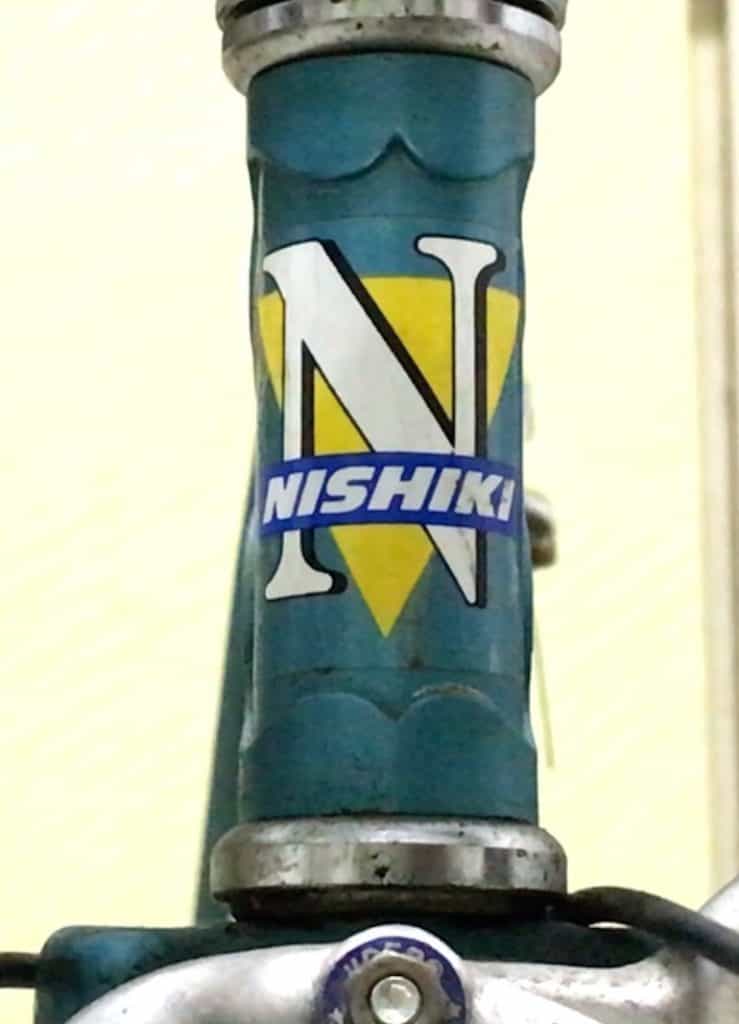
You would have seen bikes in worse status than this i.
The frame has endured many scratches and gouges over the years.
The wheels desperately need truing.
The chrome finish is faded and pitted.
1 of the shifters is partially melted (!!) from existence too close to a heat source at one time or another.
Preliminary piece of work included
► removing the restriction and derailleur cables plus housing
► stripping the bar tape
► removing the handlebars and quill stem
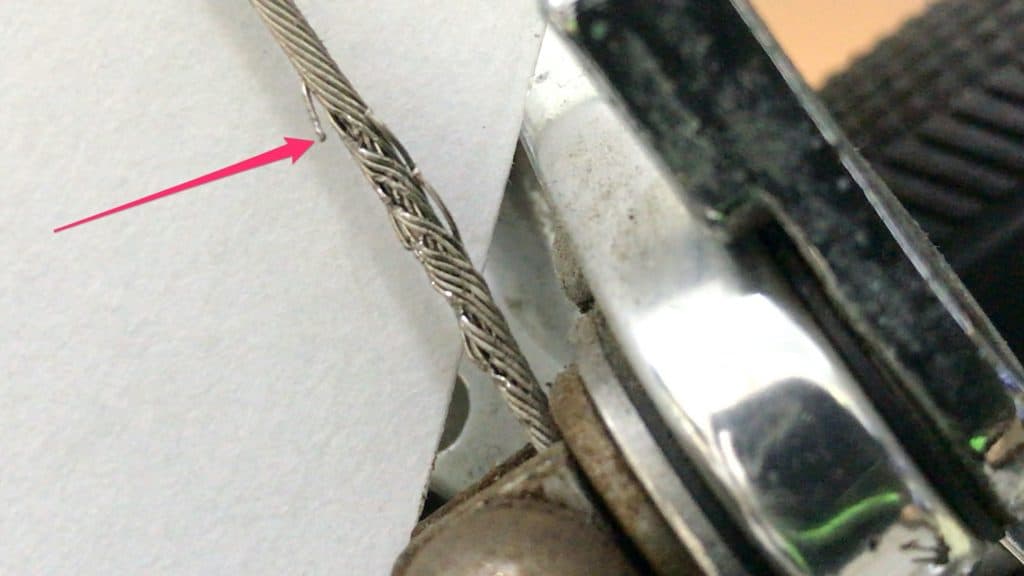
A word of caution nigh brake or derailleur cables with severed strands.
The cables on this cycle have non been changed in a long time. Tightening and loosening cable bolts over time fatigues the strands causing some to pause.
If you lot are an experienced bike technician you'll empathise what happens when you don't observe or don't have plenty care.
Equally sharp as hypodermic needles these spikes are, inexplicably, way more than painful. Always be on the lookout when working with cables…
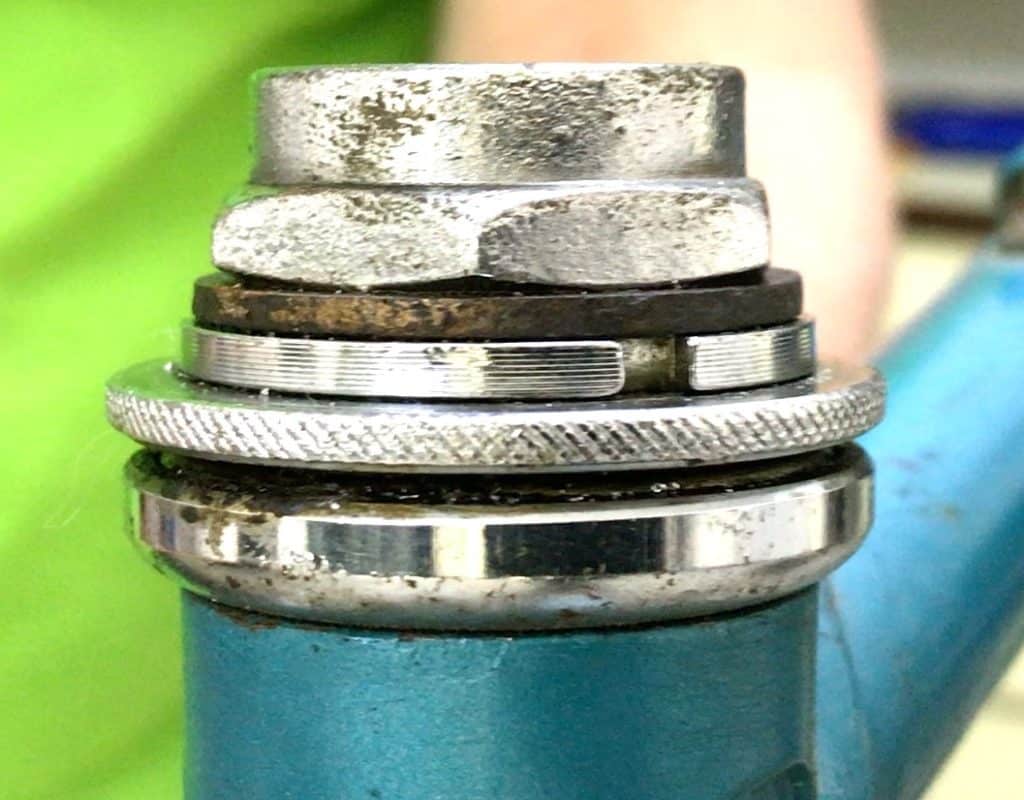
Anyhow, having removed the cables, shifters, handlebars and stem, we are left with the threadless headset.
A crescent wrench or open-concluded wrench loosens the locknut—it screws off easily. The washer is likewise easily lifted from the steerer.
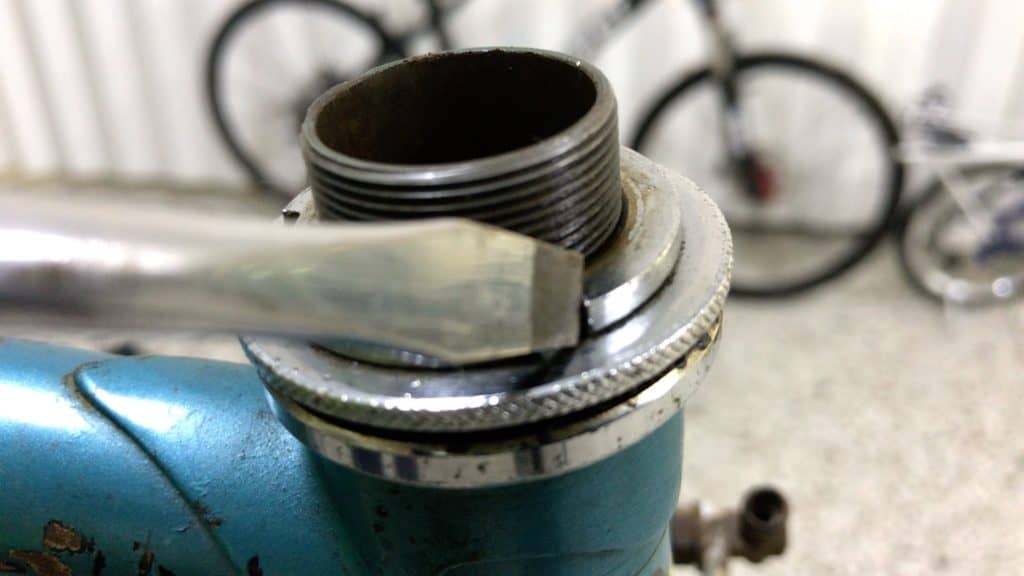
A retaining band holds the threaded top race in position on this older model. In one case loosened with a flat-bladed screwdriver, you tin can remove it past paw.
You can too remove the threaded race beneath by hand.
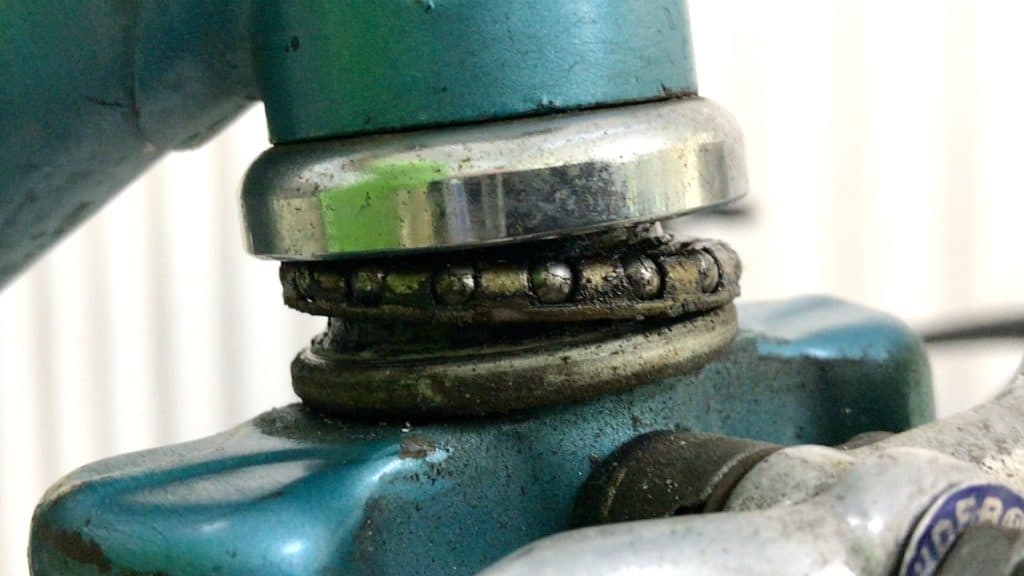
The threaded race's function is to hold the fork in the head tube also equally exert the correct pressure on the bearing, so support the fork in i mitt as you turn it. Otherwise the fork will driblet to the floor.
Having removed the nut, you can slide the steerer downwardly through the head tube completing fork removal.
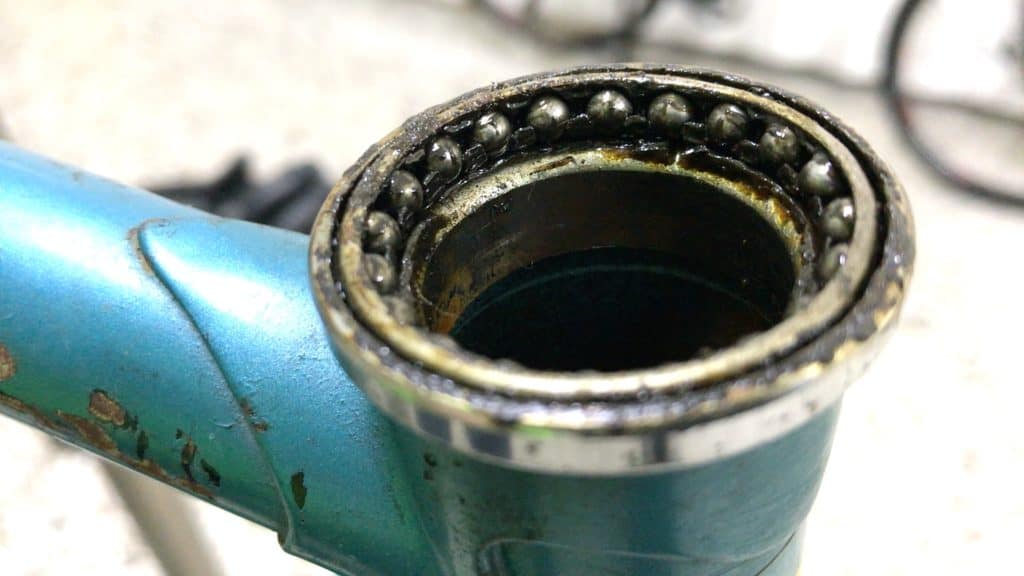
This Nishiki uses bearings fixed in a bearing cage or retainer every bit it's also called.
You lot elevator the cage out of the head tube cup in one case the fork is clear. The lower bearing comes out on the fork crown race. I'll focus on removing the crown race below.
Threaded Headset Cup Removal
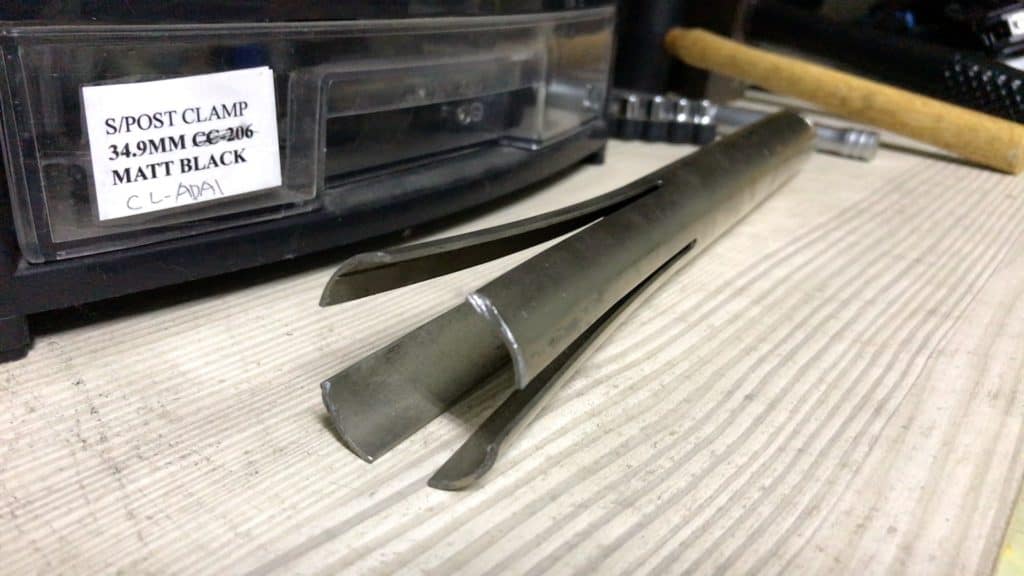
A cup removal tool is the right way to remove threaded headset cups. The blades distribute pressure evenly forth the cup's surface.
You tin can employ a flat-headed screwdriver, though.
The technique requires continually moving the screwdriver to an side by side indicate, giving a few calorie-free taps, then moving to the next point in succession.
If you hammer away for too long in the 1 spot, the loving cup may wedge at an bending in the head tube—very difficult to motion should information technology jam sideways.
Threaded Headset Fork Crown Race Removal
The crown race sits firmly on the fork crown at the base of the steerer. To prise information technology clear, you lot need the right tool.
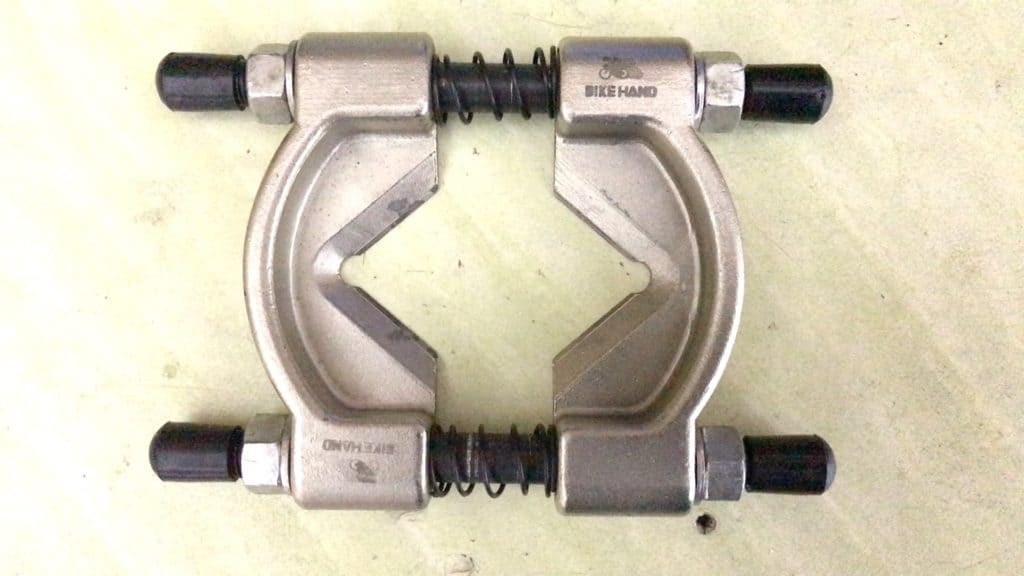
This is a crown race removal tool and looks a chip different to the Park Tool crown race puller, to say the least!
The Park Tool CRP-2 is mode more tool than yous need for this job. And 5x more than expensive than the model we apply—both are available on Amazon by the fashion.
Y'all could go tool-free on this of form, using a wide-head screwdriver or something similar to lever the race free.
You'll probably gouge the paintwork though . This method is also very impuissant. Investing in a tool is the mode to go. Or accept the fork to a bike shop.
Slide the tool down the steerer; the blades sit down adjacent to the crown.
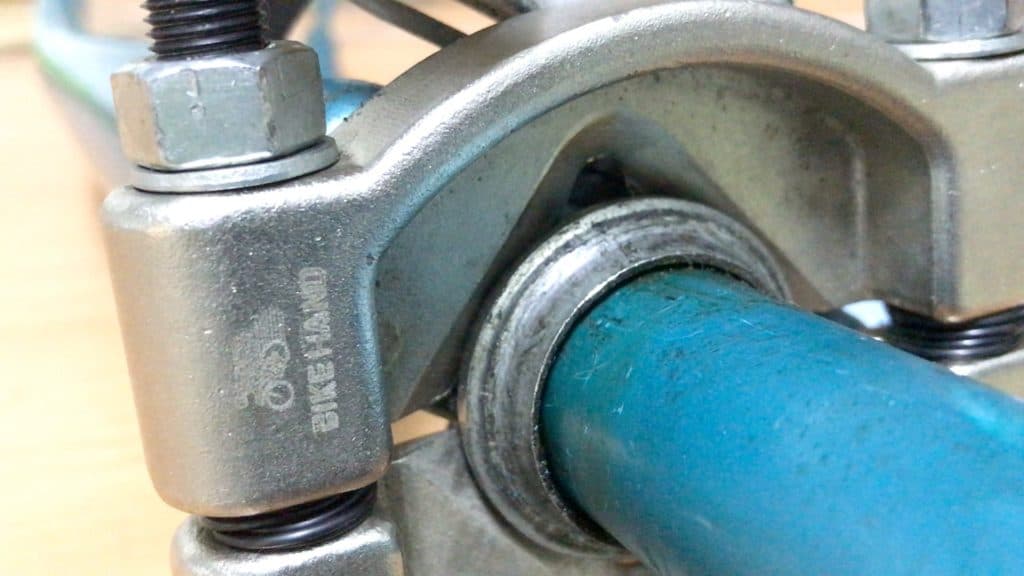
Tightening the bolts—alternating each side to keep them in balance—moves those wedge-shaped edges nether the crown race gently lifting it abroad from the crown.
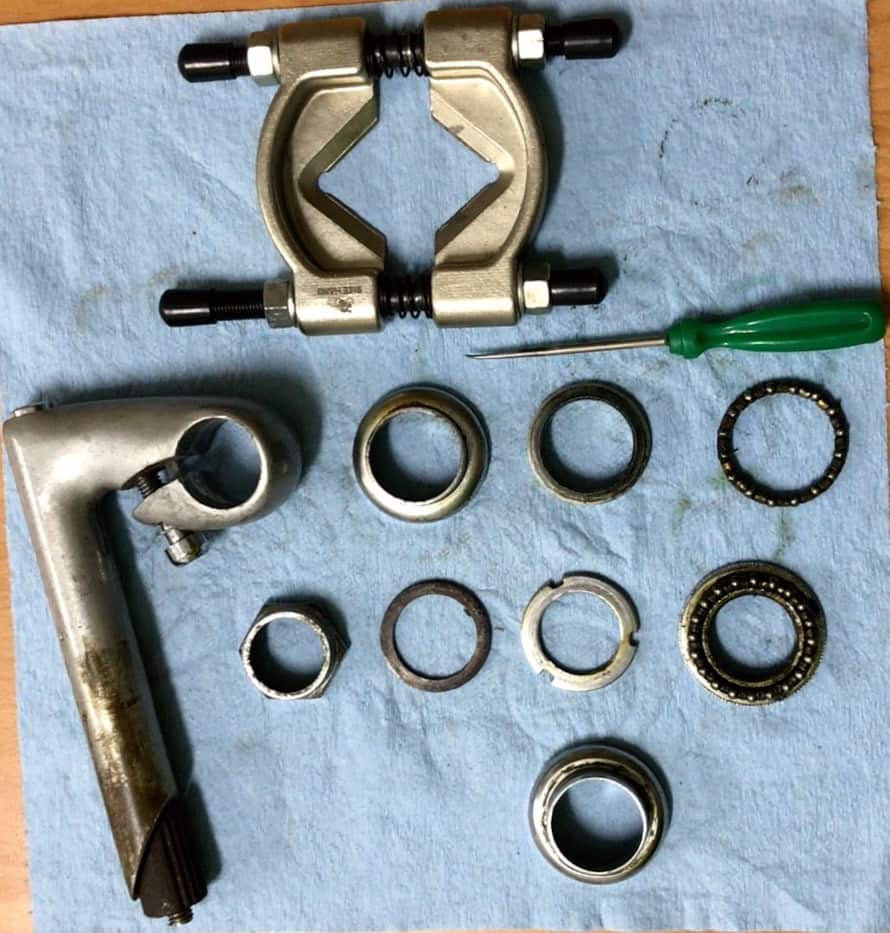
The removal complete, we can now turn to installing the new threadless headset.
HOW TO INSTALL A THREADED HEADSET
Bang the cups in, drop the begetting in the top, slide the fork on with the crown race beaing, tighten.
More often than not correct except the part about banging in in the cups!
Headset Cup Press Tool
You need a headset loving cup press tool to install the headset cups gently and evenly into the head tube.
A hammer and a block of forest is an selection, only very clumsy. The risk of damage to the cups or the bike frame is loftier. No need for hammers at any point in the installation .
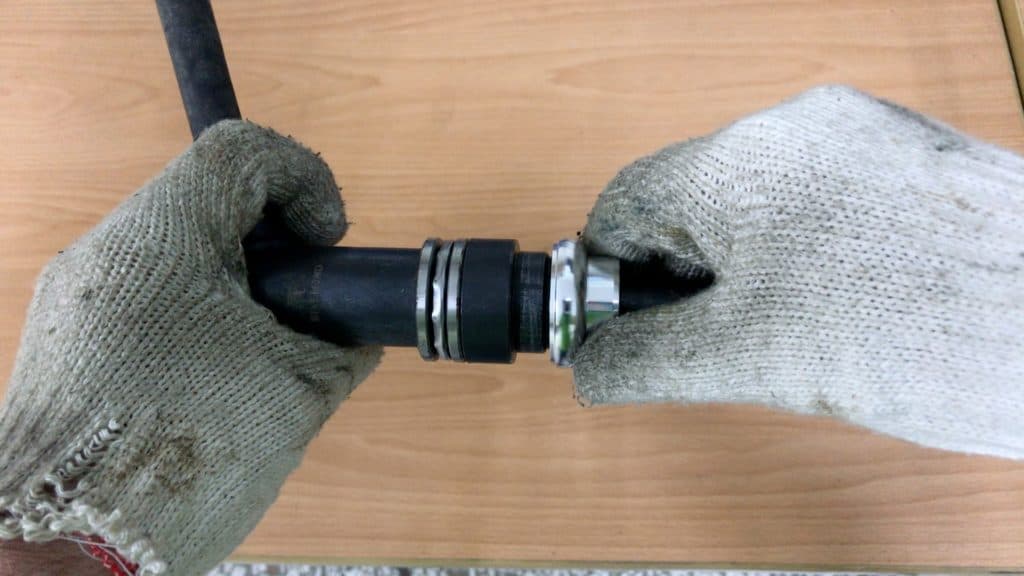
You firstly skid the top cup into the appropriate step on the tool shaft, the one that naturally catches the cup.
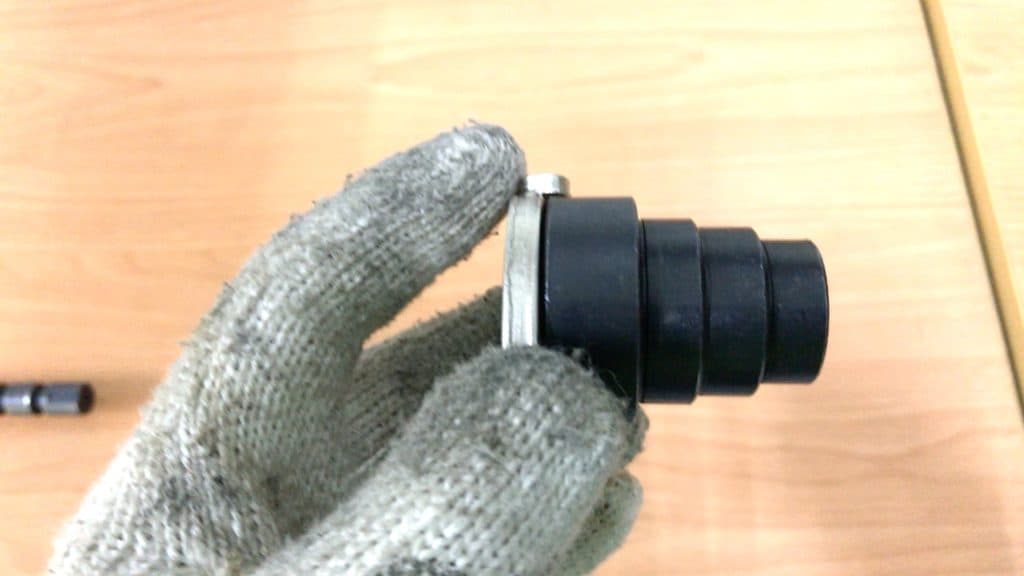
The foot is next.
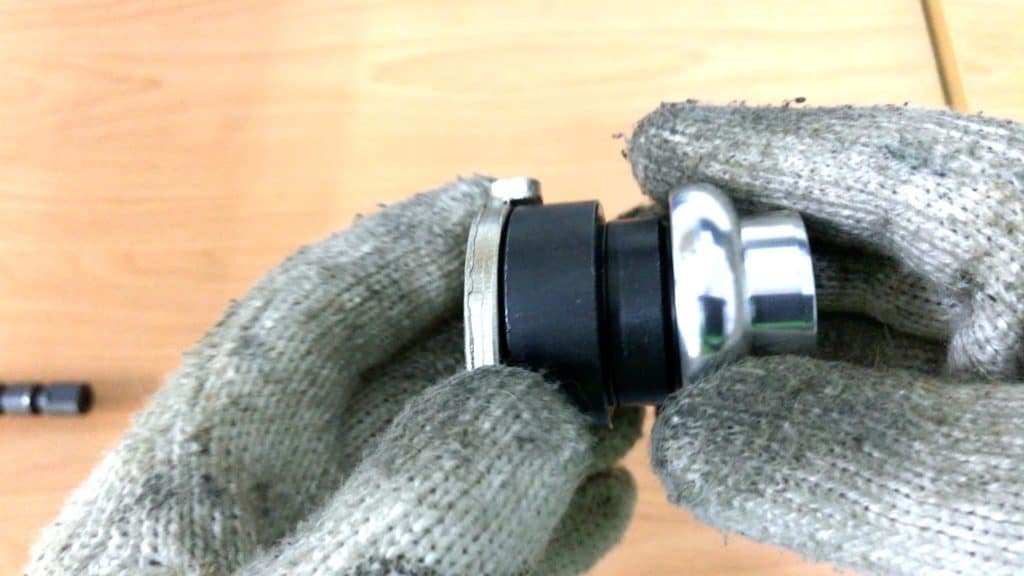
You mount the cup onto the advisable step then insert the shaft with the top loving cup into the head tube.
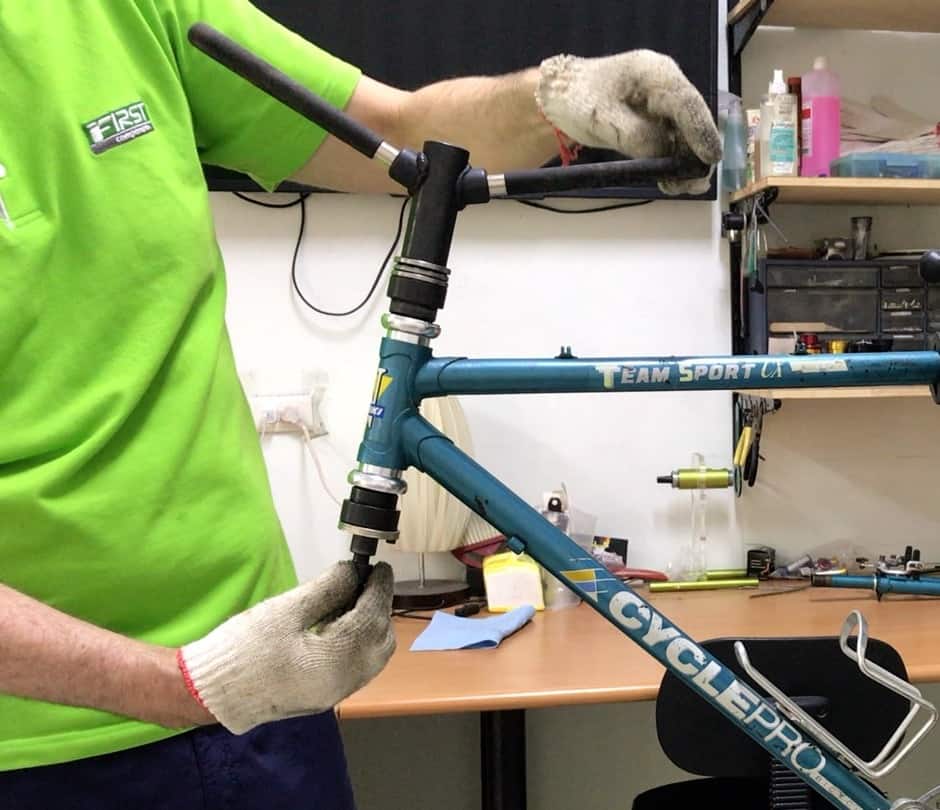
You slide the human foot upwardly towards the head tube until the cup makes contact.
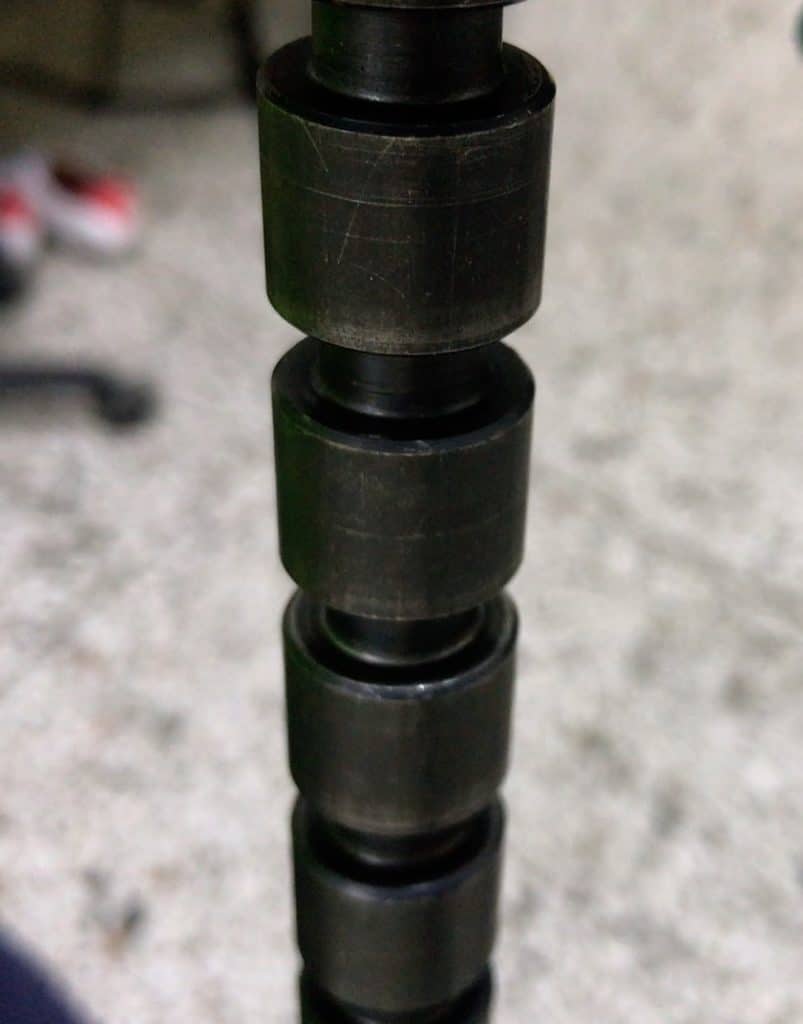
At that place are 6 notches on the headset cup press tool's shaft, each 15mm apart.
The objective is to lock the human foot onto the notch closest to the caput tube.
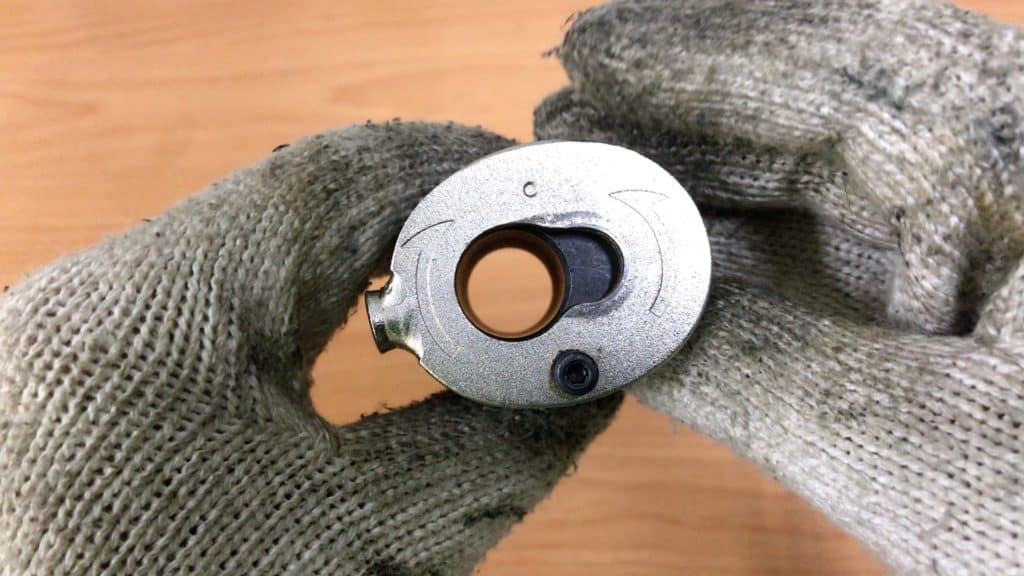
You'll slide it on with the lock-piece open, similar then.
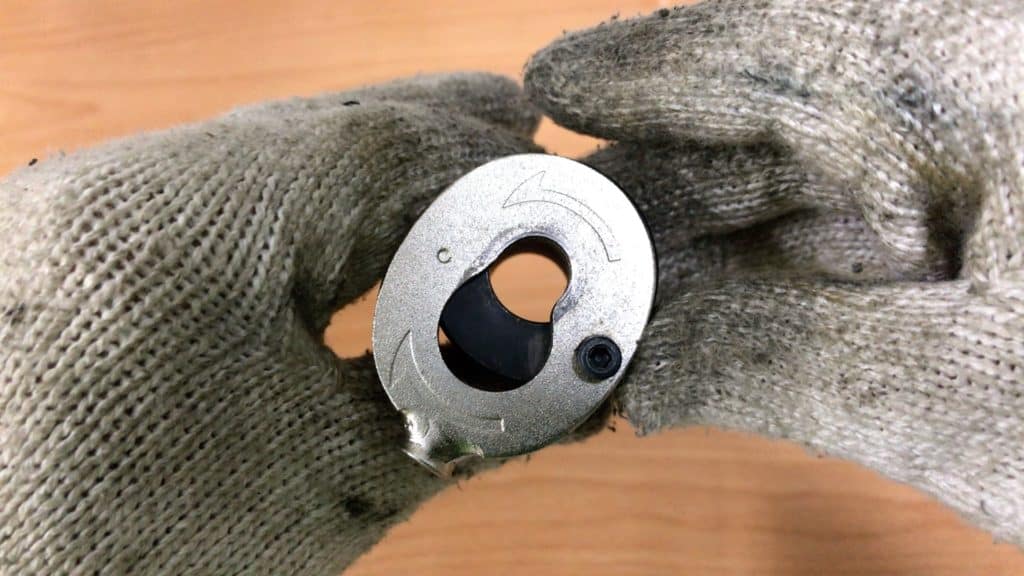
At the right notch, slide the slice across into the notch. Tightening the Allen commodities ensures the foot will not move as you rotate the tool from the top.
Since the forcefulness exerted during the installation is enough to hold the pes firmly in place, using the Allen bolt is not essential.
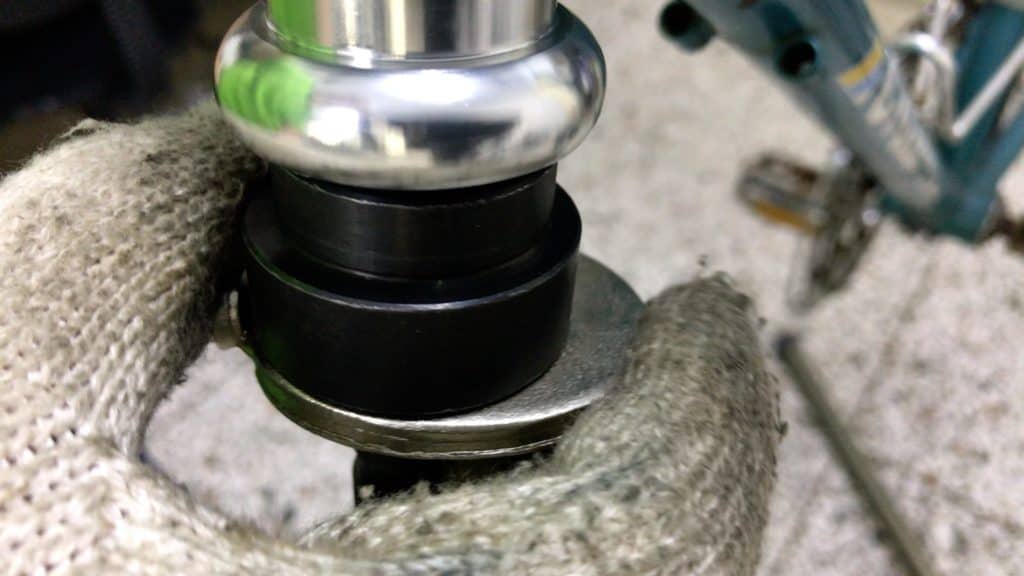
Once lodged on the shaft, you slide the lock-piece into position.
The trick is to make sure both cups are sitting squarely in the head tube, top and bottom, under house pressure. If so, evenly rotating the handles slides both cups into position.
The advantage of this tool is fifty-fifty if the cups begin their entry into the caput tube slightly crooked, a few turns squares both perfectly.
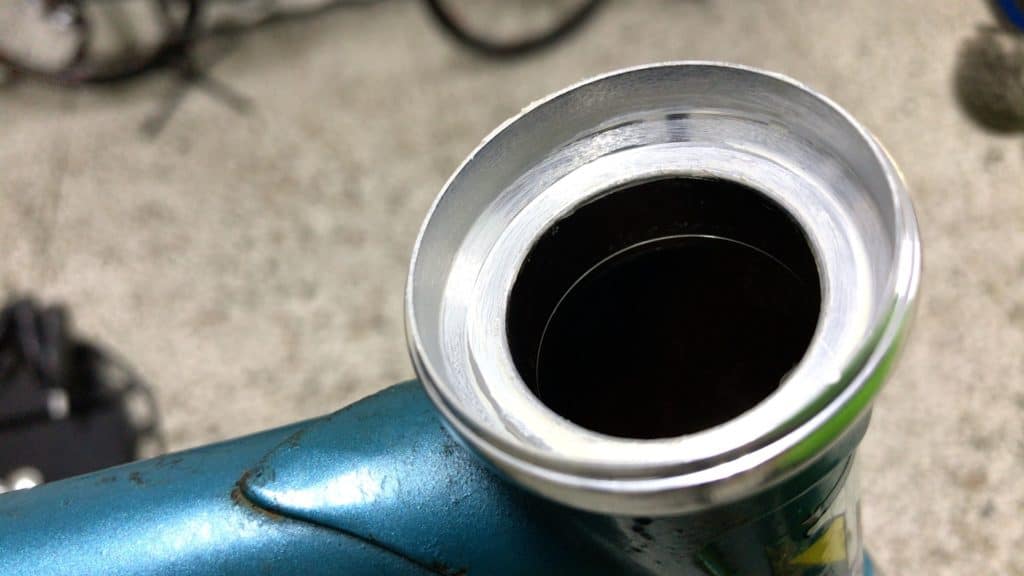
Smearing grease effectually the surface straight supporting the sealed bearing helps prevent creaks subsequently.
Some mechanics prefer applying a thick glaze of grease as a means to prevent any h2o penetration into the bearings whatsoever.
Whatever the case, a sealed bearing does a good job keeping water out by itself.
The leading border of the threaded tiptop race overlaps the rim of the loving cup which fits upwards into information technology. This design prevents water from penetrating into the begetting seat.
If a rider cleans his or her wheel with a high-pressure hose, h2o will get in. There should exist never whatsoever recourse to cleaning a bike with high-pressure level h2o.
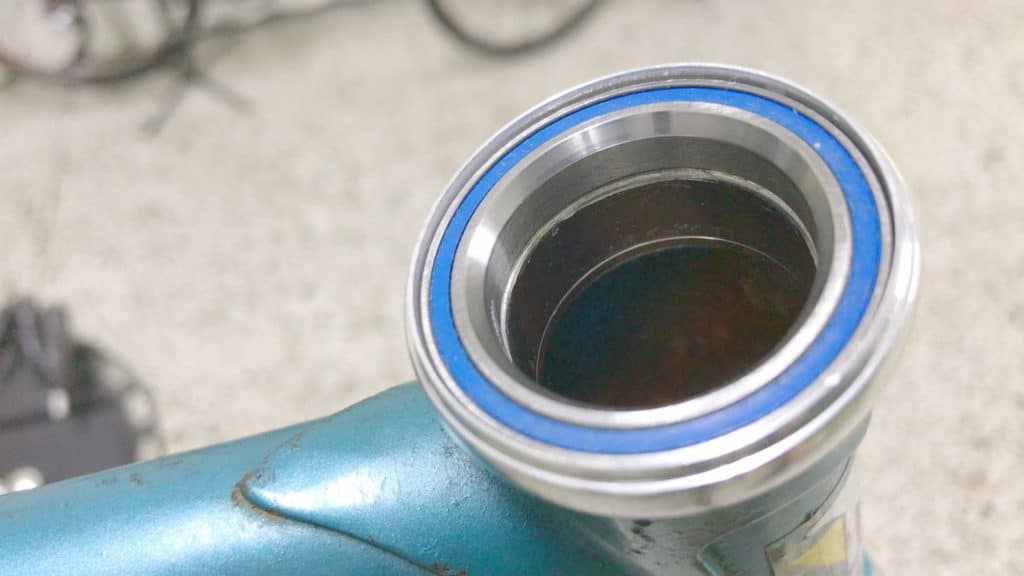
The sealed begetting is designed to fit very snugly into the cup with no move to the front, dorsum or sides.
You'll meet the begetting cup's bevelled border in this shot, helping to keep h2o completely out.
The threaded top race screws down onto the sealed begetting. The sleeve into which the threads are cut slopes up from the threads at a 45° angle.
This 45° surface engages the sealed bearing's inner race; the indicate of pressure between the two. The tighter the peak race, the firmer the fit between it and the begetting'south inner race.
Snugly tight is all y'all demand here—a sealed begetting is nowhere well-nigh as sensitive to height race torque as with caged bearings or gratis bearings, so a much wider torque tolerance is acceptable.
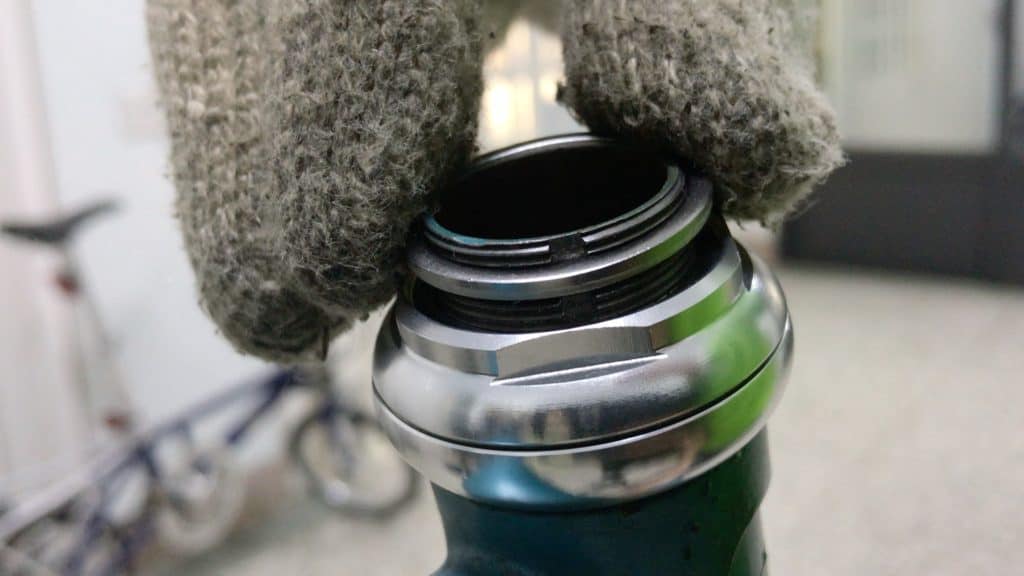
The washer slots downwards into the top race rather than onto it every bit with the quondam threaded headset.
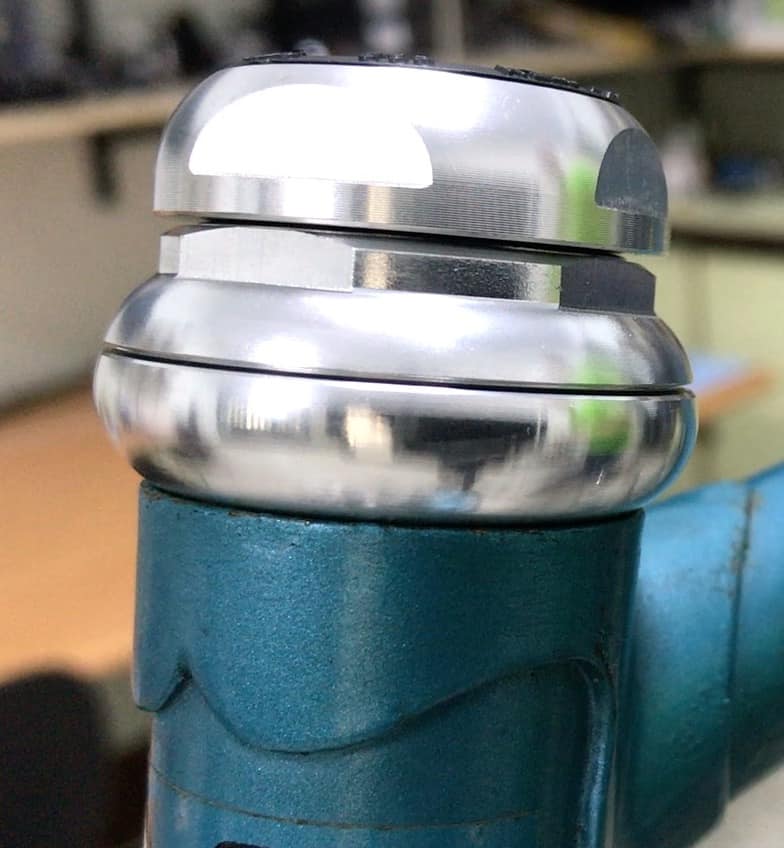
The locknut tightens down onto the race as with whatever threaded headset.
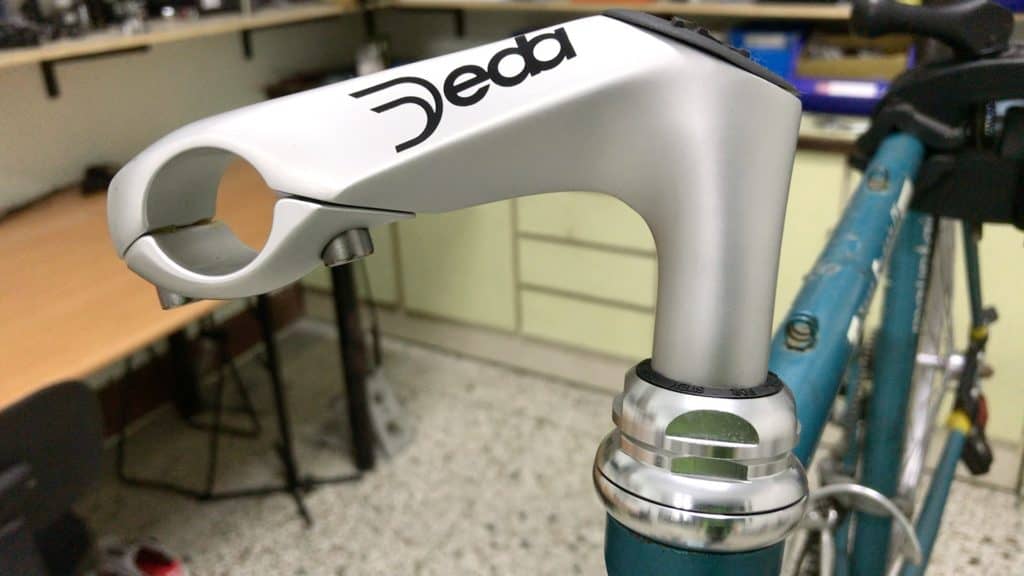
A Deda Elementi stalk happened to be hiding in a corner of the workshop—glorious discover … had completely forgotten that this piece of goodness was there. So, on it went. Mode more elegant that the original slice of ugliness, you take to agree!
WHERE TO Now?
Removing and then replacing an older threaded headset—notably a caged or loose bearing model—with a more than modern sealed bearing blueprint is a smashing style to begin an onetime bike restoration.
The effect is even ameliorate when you add an bonny new stem. At that place is still much piece of work to be done on this bike even so.
The brakes could be refurbished although their original polish is probably lost forever.
Best to replace both forepart and back calipers with classical-style replacements.
The biggest job is frame refurbishment. You need to remove all components; strip the wheel down to the frame, and then take it to a paint shop
Having dealings with a paint shop in Taiwan is handy. You lot tin can commonly convince the owner to do a custom task for you. Matching the Nishiki's color is no problem. And information technology's monochrome. No two or more colour combos to complicate the spray.
But what about the decals?
Well, you'd need some other connection with a design and printing visitor, get a set up made. Applying the decals takes a skilled worker less than 5 minutes.
With that core job out of the way we'd then install a spruced-up crank, toe-clip pedals, a new bar and archetype shifters.
One day …

Source: https://www.firstcomponents.com/threaded-headset/
Posted by: perrinandill.blogspot.com
0 Response to "How To Install Threaded Fork"
Post a Comment